
Snorkeling Aruba's south coast: the shore spots, honestly
 Your booking is financially protected by Trust My Travel
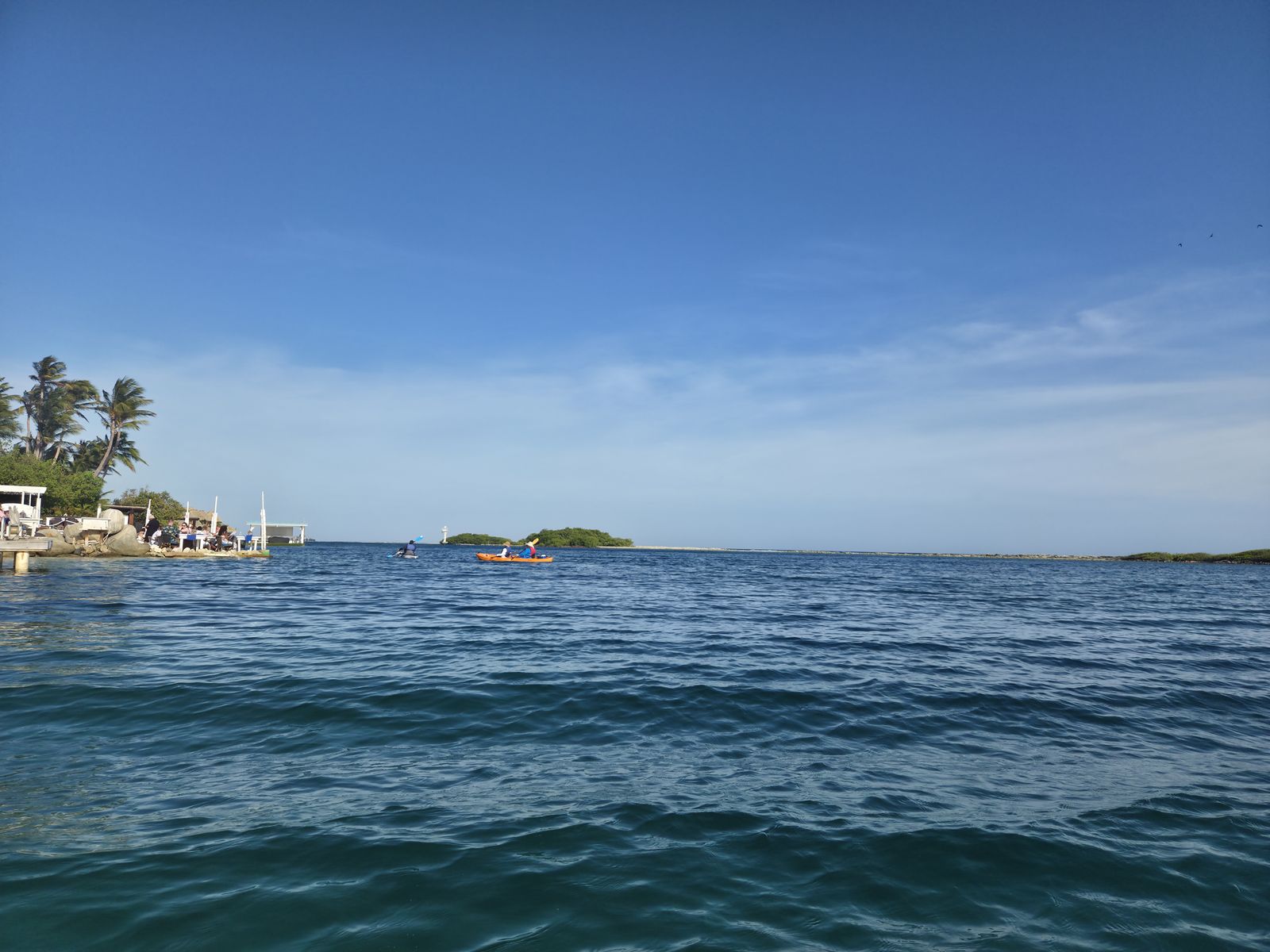
Aruba's south coast is the sheltered side of the island. The trade wind that batters the north shore arrives softened, the water lies flat for most of the day, and the reef sits close enough that you do not need a boat to meet it. Here is where you can actually get in, what you will see, and what each spot asks of you.
Mangel Halto, Pos Chiquito
The anchor of this coast. A mangrove fringed shoreline in Pos Chiquito with calm, shallow water inside, a reef that starts close in, and a wall further out that shore divers travel for. Visibility on a good day runs around twenty meters.
Entry is from several points along the shore, in places down small staircases rather than off sand, so bring footwear you can swim in. In the shallows expect parrotfish, yellowtail snapper, sergeant majors and blue tangs. Further out, octopus, green moray eels, barracuda and sometimes sea turtles. Facilities are minimal: palapas, a sun deck, unpaved parking, no restrooms. The water worth swimming to is further from the beach than it looks, which is why most guided trips paddle out rather than swim out. More in our Mangel Halto Beach guide.
Baby Beach, Seroe Colorado
At the island's southeastern tip, a near enclosed lagoon with a marked snorkeling area toward the mouth of the bay. Inside the rope the water is shallow, clear and gentle, which makes it an easy place to put a nervous first timer in the sea.
The warning is simple: do not cross the rope. Past the barrier there is genuine current and open ocean exposure, and the switch from one to the other is abrupt. Facilities are good here, with parking, bathrooms, rentals and food. See the Baby Beach guide.
Rodgers Beach
Next door to Baby Beach and much quieter. Calm, swimmable water, showers, parking and a restaurant on site, with a dive shop next door for gear. The snorkeling is pleasant rather than dramatic, and it pairs naturally with the murals of San Nicolas. More in the Rodgers Beach guide.
Isla di Oro, between Pos Chiquito and Savaneta
Despite the name, not an island. It is a shallow reef roughly a hundred and fifty meters off the mangrove shoreline between Pos Chiquito and Savaneta, with the ruins of a 1960s restaurant built over the water. The footbridge that once reached it is closed and unsafe, so the structure itself is off limits.
The reef around it is another matter: brain, staghorn, star and plate corals, sea fans, angelfish, porcupinefish, moray eels and lobsters. Reaching it means a boat or a kayak rather than a swim from the road.
Two honest caveats
The famous wrecks are not here. Aruba's best known wreck dives sit on the north and west coasts. If someone recommends a spot near Malmok or Boca Catalina, that is the other side of the island.
Conditions matter more than lists. The south coast is calm most days, not all days. Wind, tide and boat traffic change what is sensible on any given morning, and none of that shows up in a guidebook. Ask a local, and if the answer is not today, believe it.
Snorkeling this coast with a guide
A kayak solves the two problems shore snorkeling has here, distance and judgment. You ride out dry to the water worth being in, and someone who has read this coast for years picks the spot.
Our Mangel Halto kayak and snorkel tour meets at the Mangel Halto beach sign in Pos Chiquito, paddles the sheltered mangrove channels of Spanish Lagoon, and makes two snorkel stops, at the barrier reef and at the coral garden. Gear, kayak, water and fruit are included. If you would rather hunt ocean tumbled glass than fish, the Sea Glass Island kayak tour launches from the ramp in Savaneta.
Both run daily and last 2.5 hours in small groups: 8:30 AM for the calmest water of the day, 1:00 PM for the strongest color under the surface, and a sunset departure (4:30 or 5:00 PM depending on the route) for the sunset paddle home. The company was founded by a veteran Aruban ranger with decades on Aruba's south coast, and every guide learned this water from him. Adults pay $89.99 at our summer rate, children from 6 to 12 pay $69.99, minimum age 6. Instant confirmation, free cancellation up to 24 hours before departure, WhatsApp +1 786 971 2221. See times and book.
Questions guests ask
Where is the easiest snorkeling on Aruba's south coast?
Inside the lagoon at Baby Beach, where the water is shallow, clear and sheltered, and inside the calm water at Mangel Halto. Both are forgiving places to start.
Do I need a boat to snorkel here?
Not for Mangel Halto, Baby Beach or Rodgers Beach, which are all shore entries. The reef at Isla di Oro needs a boat or a kayak, and at Mangel Halto the better water is far enough out that most people paddle rather than swim to it.
What will I see under the water?
Parrotfish, yellowtail snapper, sergeant majors and blue tangs are the regulars, with octopus, moray eels, barracuda and occasionally sea turtles in the deeper water off Mangel Halto.
Is the south coast better than the north coast for snorkeling?
It is calmer and more sheltered, which makes it easier. The north and west coasts hold the famous wrecks. They are different days out, not competing ones.
Check dates and book
Live availability for the Spanish Lagoon and Mangel Halto departures. You do not have to leave this page to pick a date.
US$89.99 per adult, US$69.99 per child 6 to 12. Door to door pickup and return, US$110 per vehicle round trip, per booking not per person, added when you book.
The calendar did not load. Open it in a new tab, or use the booking button below.
Looking for another route or a different time? See all tours and times.
Choose your adventure
Live availability and instant booking. Pick a date, grab your paddle, and we'll see you on the water.