
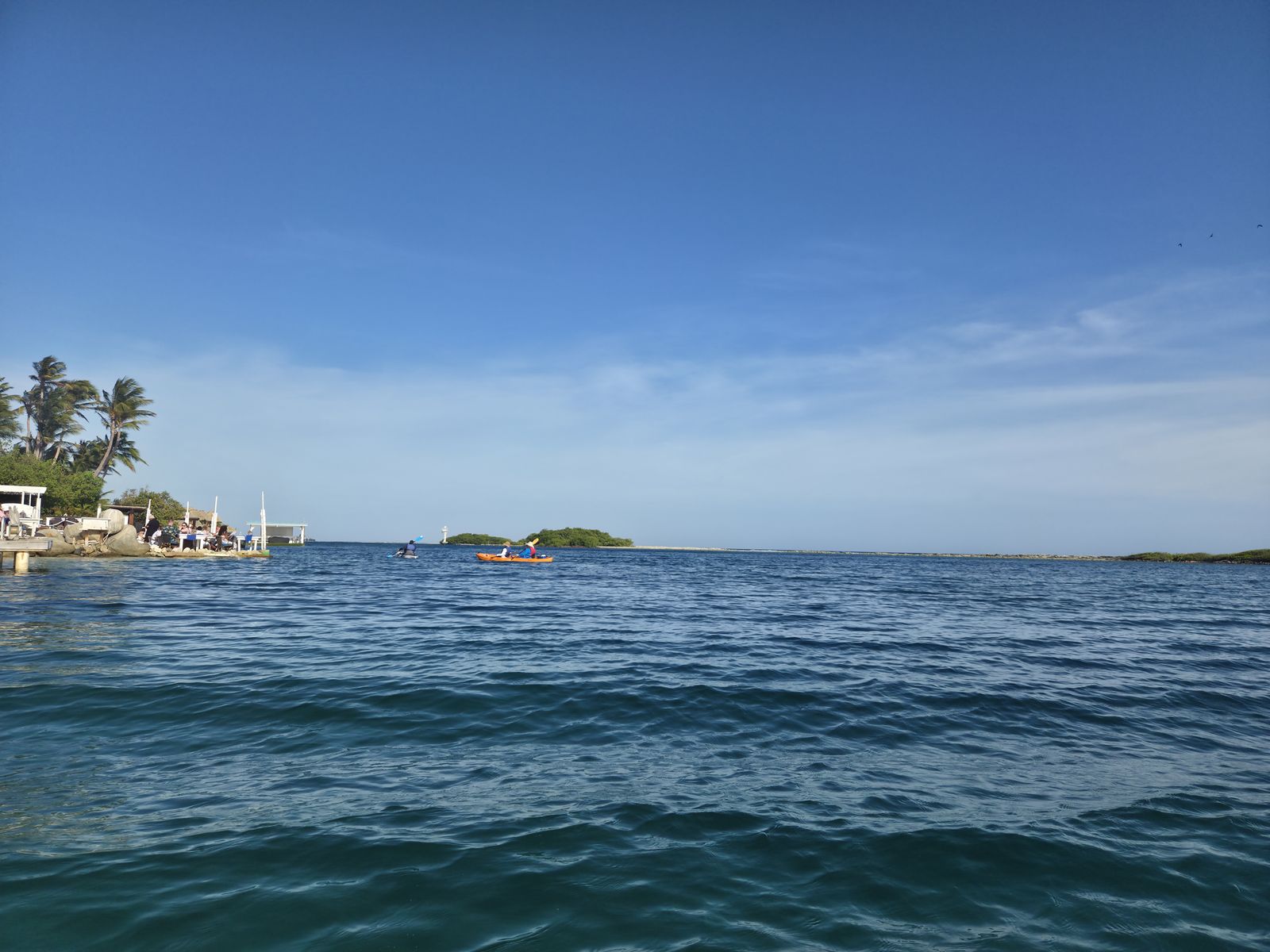
What Sea Glass Island actually is, and how this coast made it
 Your booking is financially protected by Trust My Travel
Sea Glass Island is a low, uninhabited islet in the sea off Savaneta, on the sheltered south coast of Aruba. No bridge reaches it, no sign names it, and nothing on it was ever built for a visitor. This page explains what it is, why its shoreline holds what it holds, and what you may honestly expect to find and to carry home.
The name is a nickname, not a place name
Sea Glass Island is a description that stuck. It appears on no road map, nothing on the coast points toward it, and no marker on the shore announces that you have arrived. The small cays along Aruba's south coast have always been known informally between the people who use them, and this one took the name of whatever people carried home from it.
So there is nothing official to look up, which is part of why the question gets asked so often. When a visitor searches for Sea Glass Island in Aruba, they mean one low islet offshore from Savaneta. When they search for a sea glass beach in Aruba, they usually mean the same shoreline, or the mainland shores near it that catch the same drift.
That distinction is worth holding on to. The mainland shorelines around Savaneta are public, walkable and free, and they collect material too. The islet is the one you cannot reach on foot, and that is the only reason there is still anything left on it.
Where it sits, and why the water there is calm
Aruba runs northwest to southeast, and the trade winds arrive from the east and northeast on most days of the year. Everything about the island's coastline follows from that. Surf works the ironshore the length of the windward edge, while the far side lies out of the breeze, calm enough that every settlement on the island ended up on it.
Along the south coast between Savaneta and San Nicolas, that leeward shore stops being a single line and breaks into pieces: shallow flats running out from the land, sheltered corners, and a scatter of low cays sitting inside a reef line that takes the punch out of the swell. Sea Glass Island is one of those cays.
Between it and the Savaneta waterfront lies a channel of turtle grass and pale sand. The bottom stays in view the whole way over, shifting from dark grass beds to bright sand and back, shallow enough in places to stand on. That is why the water in between reads pale green rather than deep blue, and it is why a kayak is the usual craft for the crossing while anything with a deep hull stays out.
From the mainland the island reads as a dark line of low scrub with a bright rim under it. No high point, no tree worth the word, nothing that breaks the horizon. The place is barely taller than what grows on it.
Why no road was ever built to it
Visitors often assume the missing road is a protection order or a rule. It is neither. Building out there simply never added up.
- No fresh water. Aruba is arid to begin with, and a low cay of coral limestone holds nothing. Nobody could have lived out there without carrying every drop across.
- No soil. What passes for ground is broken coral, shell and salt burned sand. It grows scrub and refuses almost everything else.
- No harbor worth building. The mainland side already had the sheltered water and the flat land, and a village grew there instead. That village is Savaneta.
- A causeway would have to cross moving water. The channel drains and fills the flats behind it, and blocking that flow is the sort of thing that quietly kills a shoreline.
So the islet stayed as it was: no bridge, no causeway, no pier, no ferry to a timetable. If you are standing on it, you arrived by water and you will leave the same way.
That awkwardness is also why the shore is still interesting. A shoreline you can park beside gets walked every day, and anything worth picking up is gone early in the season. A crossing thins the traffic enough for the sea to keep ahead of the collecting.
How the sea actually makes sea glass
Two things happen to a broken bottle in the ocean, and they run on different clocks. One shapes it. The slower one is what turns it from litter into something worth stopping for.
The rounding is mechanical. A shard enters the water with edges that will cut, and wave energy pushes it against sand, coral rubble and other stones. Every contact takes off a fraction of a millimeter. Corners go first, then the ridges left by the break, then the whole sharp perimeter, until what is left sits comfortably in a closed palm. A rock tumbler with grit and a motor does that same job in about a week.
The frosting is chemical, and nothing reproduces it quickly. Container glass is mostly silica, with soda and lime added at the factory so the batch melts at a workable temperature. Seawater, slightly alkaline and endlessly patient, works into the outermost surface and pulls those sodium and calcium ions back out of it. What is left behind is a thin, silica rich, water logged skin full of microscopic pits and channels. Light landing on it scatters in every direction instead of reflecting cleanly. That scattering is the frost, and it is not a coating on the glass. It is the glass, chemically changed.
That split explains the timescale. Something recognizable as sea glass, edges gone and surface starting to haze, generally needs a decade or more. The evenly frosted, soft cornered pieces people actually keep tend to represent twenty to thirty years or longer. Nobody can date a single piece precisely, and anyone quoting an exact age for one shard is guessing.
It also explains the standard test. Craft tumbled glass gets the shape right in days and cannot get the surface right at all. Sea made glass is frosted everywhere, including inside curves, chips and the dip of an old bottle base, because chemistry reaches where grit cannot. Tumbled glass keeps glossy pockets in the hollows, carries none of the tiny crescent shaped impact marks that years of point contacts leave, and turns slick and clear the moment it gets wet.
Why this coast collects it and the north coast does not
Those variables are not abstract on this island. The windward north and east coasts take the trade winds and the open Atlantic swell head on, against raw limestone. Glass thrown in there is broken and rebroken until it is sand.
The south coast lies behind the island's bulk and behind a reef line, in shallow water over sand and turtle grass, with the moderate, repetitive, low energy motion that rounds a piece slowly and lets the chemistry keep up. Add a long working history of boats, fishing camps and village life along the shore between Savaneta and San Nicolas, supplying the raw material a bottle at a time, and the result is a coast that has been quietly manufacturing sea glass for about a century.
Two local details change what you are looking at. Much of this shoreline is pale carbonate, broken coral and shell rather than dark quartz, so frosted white and milk glass disappear into the background while cobalt, amber and red carry from several steps away. And carbonate sand is softer than quartz, so the rounding runs gentler here than on an Atlantic beach. Pieces keep more of their shape while still carrying a full frost, which means you cannot judge a shard's age here by how round it is.
Where the glass sits once it lands
Orientation decides everything on a shoreline this small. The outer edge, facing open water, takes the wave energy and the drift, so that is where wrack piles up and where anything the sea carries gets put down. The inner edge is the still side, a place where things settle rather than arrive. Walk the wrong side of a small island and you can come away certain it holds nothing at all.
Above the wet edge runs the drift line, a ragged band of everything the last high water left behind: dried turtle grass in mats, sargassum when the season brings it, seed pods that floated in from somewhere else entirely, feathers, the chalky test of a sea urchin. Threaded through it is the modern half, bottle caps, rope ends, fragments of crate and fishing float. People who use this coast walk that line with a bag as well as a pocket.
The sea sorts material by weight, and glass falls in with the pebble fraction rather than the fine sand. The bands worth slowing down for are the coarse ones: the toe of a rubble ridge, the seam where gravel meets sand, the pocket where the shoreline turns and the drift piles against itself.
What you are hunting does not glint. Frosted white reads as one more chip of coral until the shape stops being coral. Green looks like a wet leaf, and amber passes for shell in strong light. Most pieces are the size of a fingernail, and the eye needs a while on the ground before it separates them from everything else. Our photo gallery shows what the shore and the glass actually look like, close up and unstaged.
The colors, and what each one came from
Color is a factory decision that outlived the factory, which is why scarcity underfoot has almost nothing to do with the ocean. The sea has no preference for blue. Blue is uncommon because far less blue glass was ever made, filled, emptied and dropped. A shoreline hands back a sample of what the coast behind it consumed.
- Everyday. Bottle green from chromium coloured beer and soda bottles, olive green from older wine and spirit bottles, amber brown from beer, rum and medicine bottles, and frosted white from clear glass that was decolorized so a buyer could see the contents.
- Less common. Soft aqua, the accidental tint of iron bearing sand from before decolorizing became routine; seafoam, its paler modern cousin; and lime green from mid century soft drinks and thin modern bottle stock.
- A lucky day. Milk glass from cold cream pots and canning lid liners, pale amethyst that was clear the day it was made and turned lavender under decades of sunlight, black glass that resolves into deep olive when you hold it up to the sky, cornflower blue from tableware and older medicine bottles, and cobalt blue from poison, medicine and apothecary bottles, many of them ribbed so they could be identified by touch in a dark cupboard.
- Exceptional. Teal and turquoise, true yellow, orange and red. Red needed gold chloride or selenium in the melt, so it went into tail lights, lanterns and warning lenses rather than packaging. Orange was essentially never made as packaging at all.
None of that is a promise about any single walk. A color that turned up twice last week can stay hidden for a month, and what the shore holds changes with every tide.
Can you take sea glass home from Aruba?
It is the question the whole category is vague about, and it deserves a precise answer rather than a shrug.
Aruba protects natural material, and enforces it. The National Ordinance Protection of Native Flora and Fauna and the Sand Ordinance cover seashells, coral and beach sand, in line with the CITES treaty. Those are confiscated at the airport, and a fine follows. That rule catches a lot of visitors who assumed a shell from a public beach was a souvenir.
Sea glass is a different object. It is manufactured glass. It is not flora, not fauna, not coral, not shell and not sand, so it does not sit under those ordinances, and there is no permit, no posted limit and nobody at the top of the beach handing out a rulebook. We are describing the ordinances as they stand rather than giving legal advice, and rules on carrying anything home vary by country and by airline, so check the ones that apply to your own trip.
Which is exactly why the local practice matters. Where the only limit is the one you set yourself, the shore's future is decided by how much the average visitor decides is enough. Very little new glass enters the ocean now: packaging moved to aluminium, plastic and cartons, waste collection was organized, and recycling intercepts most of what is still discarded. The pieces washing up finished today entered the water in a different era, and on this coast they gather in a small number of pockets rather than spreading along miles of beach.
So what people who work this water actually do is simple. Take a piece or two that means something to you and leave the rest where it lies. Never clear a pocket. Leave anything still glossy in its hollows, because the sea has not finished with it and taking it removes a future find from the shore. Put back any shell that has a hermit crab in it, opening toward the sand. And treat fresh, bright, sharp breakage as litter rather than a find: pocket it carefully and carry it out.
What the island is not
Half of what makes a place disappointing is arriving with the wrong picture of it, so here is the honest version.
- It is not a beach in the resort sense. No chairs, no vendor, no bathroom, no drinking water, no shelter. The scrub at the back of the shore is too low to stand under.
- It is not paved in glass. The phrase glass beach suggests a shore carpeted in tumbled gems. Here the pieces are small, scattered and mixed into coral gravel, and you hunt them one at a time.
- It is not predictable. Weather stocks the shore and weather strips it, on no timetable anybody can plan a holiday around. An onshore wind can lay a fresh line overnight, and a shore walked since first light can look bare by mid morning.
- It is not a secret. The name has circulated online for years and boats and kayaks cross regularly. Expect to share the coast.
- It is not a coral garden. The water around the islet is grass flat and sand rather than reef wall: calm, clear swimming, not a dramatic drop off. If the underwater half is what you came for, the reef sits west of here at Mangel Halto.
Set against that, the island offers something genuinely uncommon: a shoreline with no infrastructure on it at all, on an island where most of the coast has a road or a hotel behind it. You get the shore the way the weather left it. Underfoot expect coral gravel and shell hash rather than sand, rubble ridges that are easy to roll an ankle on, and beachrock shelves near the water that go slick where algae has taken hold. Closed shoes or proper sandals, not bare feet, and sun cover you brought yourself.
How to cross, and what it costs
There are two ways onto the island: bring a craft of your own, or go across with people who make the crossing regularly. The water between is shallow and sheltered, so kayaks and small boats do nearly all of the traffic.
Short is not the same as trivial. The breeze builds as the day warms, and a line that feels effortless on early water wants more thought once the surface starts to texture. Wind direction also decides which side of the islet is comfortable to land on, and that changes.
Our guided Sea Glass Island kayak tour leaves from the Savaneta boat ramp next to the Flying Fishbone restaurant, daily at 8:30 AM, 1:00 PM and 5:00 PM, and runs about 2.5 hours. Adults pay $89.99 and children from 6 to 12 pay $69.99, with 6 as the minimum age. Hotel pickup and drop off is available at $110 per vehicle round trip, priced per booking rather than per person. Kayak, safety gear, water and fruit are included. This route is a paddle and a landing, so there is no snorkel stop and no snorkel gear. Booking online confirms instantly and cancellation is free up to 24 hours before departure. If you would rather have the departure to yourselves, The Rambo Expedition is the private evening trip at US$449 for the group.
The company was founded by Rambo, a veteran Aruban ranger with decades on this coast, and he taught every guide on the crew. Guides work in English, Spanish and Papiamento. Questions before you book reach a person on WhatsApp at +1 786 971 2221.
Where to next
Times, prices and booking sit on the Sea Glass Island kayak tour page, and every number we charge is published on what it costs. Deciding between the islet and a beach you can drive to: Sea Glass Island compared with Mangel Halto, Baby Beach and Rodgers Beach. Prefer the crossing with the sun going down: the sunset kayak tour. Packing for a coral rubble shoreline: what to bring. Coming with children: age limits and kayaking with kids. Weather and wind: our rain, wind and weather policy. The village the crossing leaves from is Savaneta, the restaurant beside the ramp is Flying Fishbone, and the fish pier a few minutes away is Zeerovers. The man the company is named for: Rambo. All routes and departures: Aruba kayak tours.
Questions guests ask
What is Sea Glass Island in Aruba?
It is a low, uninhabited islet off Savaneta on Aruba's sheltered south coast, sitting inside the reef line. The name is a nickname rather than a place name: it appears on no road map and no sign on the coast points to it. It is called that because its shoreline collects ocean tumbled glass, which is the reason people cross the water to walk it.
How do you get to Sea Glass Island, and can you drive there?
You cannot drive. There is no bridge, no causeway, no pier and no ferry timetable, so every arrival is by water. The usual way over is a kayak from the Savaneta boat ramp next to the Flying Fishbone restaurant, which is where our guided crossing leaves from at 8:30 AM, 1:00 PM and 5:00 PM daily.
Can you take sea glass home from Aruba?
Aruba protects natural material: the National Ordinance Protection of Native Flora and Fauna and the Sand Ordinance cover seashells, coral and beach sand, and those are confiscated at the airport. Sea glass is manufactured glass rather than flora, fauna, coral, shell or sand, so it does not sit under those ordinances, and no permit or posted limit applies to it. What regular hunters on this coast do is take a piece or two that means something and leave the rest, because very little new glass enters the ocean now. Import rules for anything carried home vary by country and airline, so check the ones that apply to your own trip.
How far offshore is Sea Glass Island?
Close enough that the bottom stays in view the whole way across. Published figures online disagree with each other, so we describe it by the crossing instead: it is a short paddle from the Savaneta waterfront over shallow turtle grass and pale sand, minutes rather than an expedition, and shallow enough in places to stand on.
What colors of sea glass turn up, and which are scarce?
Bottle green, olive, amber brown and frosted white fill a palm first, because those are the colors packaging was made in. Soft aqua, seafoam and lime green come next. Cobalt blue, cornflower blue, milk glass, pale amethyst and black glass are a lucky day. Red, orange, true yellow, teal and turquoise are exceptional, and the reason is the factory rather than the ocean: almost none of that glass was ever made. Nothing about any single walk is predictable.
Are there bathrooms, shade or anywhere to buy water on the island?
None of those. There is no bathroom, no drinking water, no vendor, no bin and no built shade: the scrub at the back of the shore is too low to stand under. Whatever you want out there you carry over and carry back. The ground is coral gravel and rubble rather than sand, so closed shoes or proper sandals matter more than they would on a beach.
Choose your adventure
Live availability and instant booking. Pick a date, grab your paddle, and we'll see you on the water.