
Sea Glass Island or a south coast beach: which one suits your day
 Your booking is financially protected by Trust My Travel
Four places on the same quiet coast, and people compare them as though they were interchangeable. They are not. Three of them you drive to and park at. One of them has no road, and that single fact decides almost everything else. Here is what each one is actually like, and who each one suits, so you can pick without a second afternoon of research.
The one difference that decides it
Mangel Halto, Baby Beach and Rodgers Beach are public beaches with car parks. You arrive when you like, you stay as long as you like, and it costs nothing but fuel. Sea Glass Island is an uninhabited islet offshore from Savaneta with no bridge, no causeway, no pier and no ferry, so you either bring a craft or you cross with somebody who makes the trip regularly.
That is the whole trade. A beach is a place to be comfortable in. The islet is a place to go and see, on a shore nobody maintains, and the awkwardness of reaching it is the reason there is still anything on it to find. If you want a lounger and a cold drink, take the beach. If you want somewhere the weather has been left in charge, take the crossing.
Nearly every visitor to the south coast should do at least one beach and, if the water suits them, the paddle. They are different halves of the same coastline, not rivals.
Mangel Halto, Pos Chiquito
Mangel Halto does not look like the Aruba on the postcards, and that is exactly why Arubans keep going back. Roughly six hundred meters of sand, a wall of mangroves growing straight into the sea, water so calm it barely counts as surf, and a reef sitting closer to shore than you would expect.
Getting there. On the road from Oranjestad toward San Nicolas, generally ten to twenty minutes from the capital and only a few minutes west of Savaneta. Parking is a free, informal, unpaved area with limited room, and it fills at weekends. Look for the beach sign rather than for a car park.
What is there. Public palapas and beach huts for shade, a wooden sun deck over the water, deep shade under the mangroves themselves, and a small bar and restaurant. Do not count on public restrooms. Entry into the water happens at several points along the shore, sometimes down small staircases rather than off sand, and the shoreline is limestone and reef rubble as much as it is beach, so footwear you can swim in is a sensible call.
The water. Calm, warm and clear behind the mangroves, which makes it a forgiving place to put a mask on for the first time. Further out the reef starts, and past the reef the bottom falls away into the wall that shore divers come for. Visibility on a good day runs around twenty meters. Parrotfish, yellowtail snapper, sergeant majors and blue tangs in the shallows, with octopus, green moray eels, barracuda and sometimes turtles further out. The reef here is protected: nothing is taken and nothing is stood on.
Who it suits. Anyone whose day is really about what is under the surface. The honest limit is distance, because the water worth swimming to is further out than it looks from a towel. Full detail on the Mangel Halto Beach guide, and if you would rather paddle out and be shown where to look, our Mangel Halto kayak and snorkeling tour meets right there at the beach sign.
Baby Beach, Seroe Colorado
Baby Beach is the reason families drive all the way to the far end of the island. It is a half moon of sheltered lagoon at Aruba's southeastern tip where the water stays waist deep and warm for a very long way out, which is exactly what you want when the smallest member of the party is three years old and fearless.
Getting there. Past the town of San Nicolas, at the bottom corner of the island. From Oranjestad expect somewhere in the region of half an hour by car, and from Savaneta roughly twenty minutes further east. The road is straightforward and well signed once you are past San Nicolas.
What is there. More than anywhere else on this end of the island: free paved parking, free sun huts, chairs, umbrellas and snorkel gear for rent, public bathrooms, a casual food stand, a grill restaurant on the beach and a dive shop nearby. The parking fills, though, and on weekends and cruise ship days the lot and the sand are both busy well before midday.
The water, and the rope. The bay is almost enclosed, which is what makes it so calm. Snorkeling happens toward the mouth of the bay, where the lagoon opens to the ocean and the reef life gathers, and there is a marked area and a rope line. Do not cross the rope. Beyond the barrier the conditions change completely into real current and real wave exposure, and that contrast catches confident swimmers out. Treat the line as a wall rather than a suggestion.
Who it suits. Families with small children, and anyone who wants a full day with facilities rather than an outing. Full detail on the Baby Beach guide.
Rodgers Beach, next door
Almost everyone who drives to the southeastern tip is aiming for Baby Beach. Rodgers Beach is the one they drive past, and on a busy Saturday it is often the smarter call: the same calm water, the same corner of the island, a fraction of the crowd.
Getting there. Immediately next to Baby Beach, close enough to walk between the two or drive it in about a minute. The two beaches share the same access road, so the drive is the same drive.
What is there. A narrow crescent of powdery white sand, public parking, showers, a restaurant on site and a dive shop next door, which is more than most quiet beaches on Aruba offer. Shade is the shortage, so bring an umbrella. At the far end of the bay local fishermen keep brightly painted boats at anchor, which is the detail most people photograph. The refinery site that shaped this end of the island still stands between the town and these beaches and is visible from the sand: some visitors find it jarring, others find it honest, and it does not affect the water.
The water. Calm and swimmable. Snorkeling is pleasant rather than dramatic, and the livelier reef life on this end of the island gathers around the mouth of the bay at Baby Beach next door.
Who it suits. People who want the southeast without the crowd, and readers who genuinely intend to read. Weekdays here are peaceful to the point that a book is the main activity. Full detail on the Rodgers Beach guide.
Sea Glass Island, offshore from Savaneta
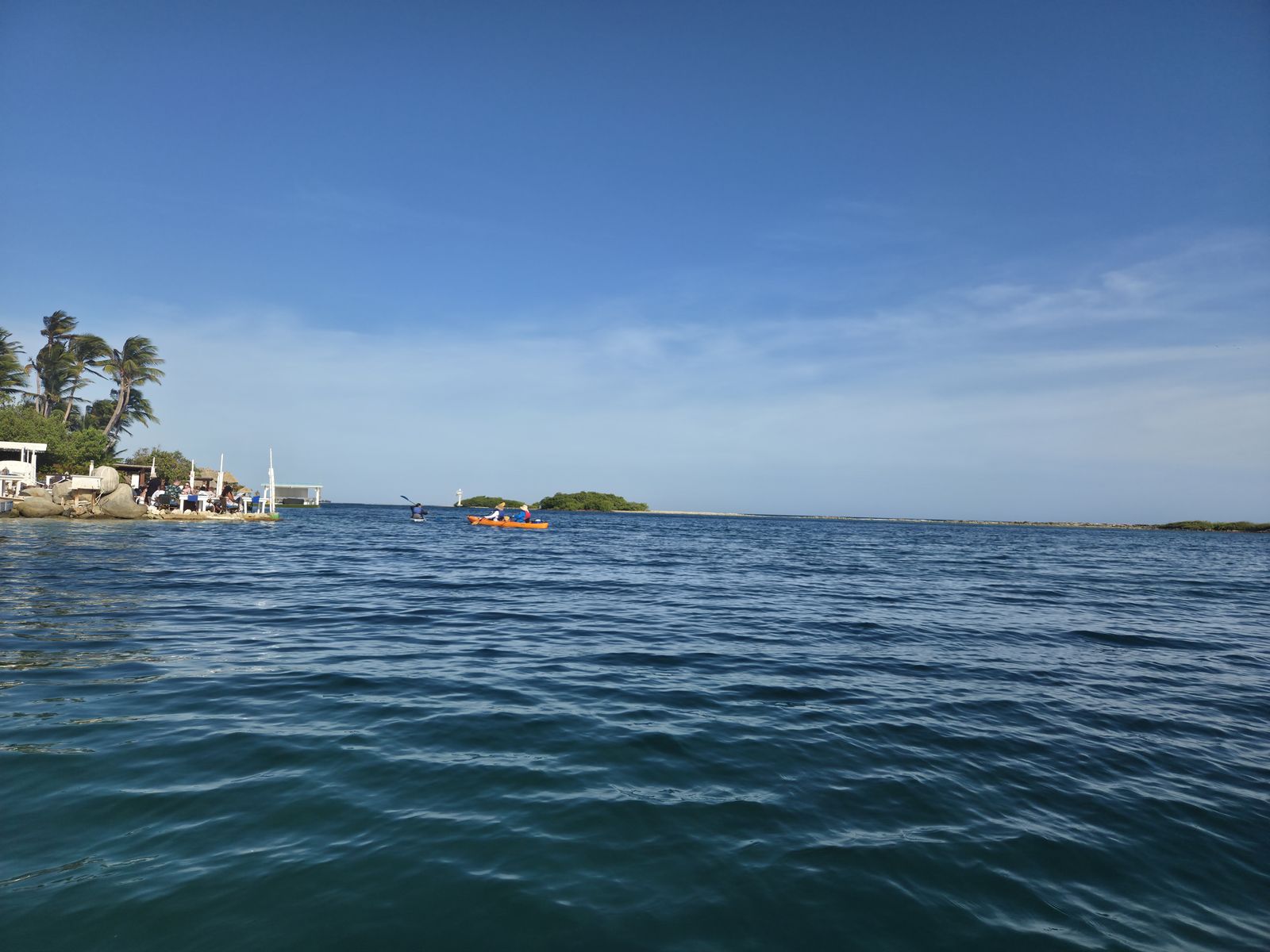
A low, uninhabited islet inside the reef line, reached only by water. The shoreline is coarse coral gravel and shell hash rather than sand, with rubble ridges above the water line and beachrock shelves near it, and along the drift line the sea leaves ocean tumbled glass among the wrack: greens, ambers, frosted whites, and on a lucky day something scarcer.
Getting there. The crossing starts at the Savaneta boat ramp next to the Flying Fishbone restaurant. It is short, the bottom stays in view the whole way, and a kayak is the usual craft because the channel is shallow. The breeze builds as the day warms, and wind direction decides which side of the islet is comfortable to land on, which is where a guide who has paddled it for years earns their keep.
What is there. Nothing. No bathroom, no drinking water, no vendor, no bin, no built shade and no path. Whatever you want out there you carry over and carry back, and closed shoes matter more than they would on a beach. Pelicans work the shallows, frigatebirds hang on the trade wind, and in the warmer months terns nest on open ground in scrapes coloured exactly like the gravel, so a bird calling and circling overhead means back off and give that stretch the day.
The honest caveat. It is not paved in glass. Pieces are small, scattered and mixed into coral gravel, and you hunt them one at a time. Weather stocks the shore and weather strips it, so what will be out there on your particular Tuesday is not knowable by anybody. The full picture, including how this coast makes the glass and what you may take home, is on what Sea Glass Island actually is.
Who it suits. People who would rather arrive somewhere than sit somewhere. Times, prices and booking are on the Sea Glass Island kayak tour page.
The four side by side
| Mangel Halto | Baby Beach | Rodgers Beach | Sea Glass Island | |
|---|---|---|---|---|
| How you arrive | Drive, free unpaved parking, limited room | Drive, free paved parking, fills early | Drive, public parking, shares the access road | By water only. No bridge, no causeway, no ferry |
| Where it is | Pos Chiquito, minutes west of Savaneta | Seroe Colorado, past San Nicolas | Beside Baby Beach, about a minute apart | Offshore from Savaneta, inside the reef line |
| Facilities | Palapas, sun deck, small bar and restaurant, no reliable restroom | Sun huts, rentals, bathrooms, food stand, grill restaurant | Showers, restaurant, dive shop next door, little shade | None whatsoever |
| The water | Calm behind the mangroves, reef further out, then a wall | Waist deep a long way out, reef life at the bay mouth | Calm and swimmable, snorkeling pleasant rather than dramatic | Shallow grass flat and sand, clear and calm, no reef wall |
| Underfoot | Sand, limestone and reef rubble, entry down staircases in places | Sand, gentle and shallow | Narrow crescent of powdery white sand | Coral gravel, shell hash, rubble ridges, slick beachrock |
| Who it suits | Snorkelers and anyone here for what is under the surface | Families with small children, full facility days | Quiet, reading, escaping the Saturday crowd | Beachcombers and people who would rather arrive than sit |
| Sea glass | Not what it is for | Not what it is for | Not what it is for | The reason the place has a name |
Can you find sea glass on the beaches you can drive to?
Not in any quantity worth planning a day around, and it is worth saying plainly because the internet is vague about it.
Sea glass collects where the drift piles it and where few people walk. Baby Beach and Rodgers Beach are a different corner of the island, both maintained and both walked daily, so anything that arrives is picked up quickly or never accumulates. Mangel Halto is closer to the productive stretch, but it is a popular beach with a car park at the top of it, which is the same problem.
What does catch the same drift as the islet is the public mainland shoreline either side of Savaneta. That coast is free to walk, needs no boat and needs nobody's permission. Expect less in any one pocket and more ground to cover, and go with shoes on, because the drift line holds the unfinished sharp version of the same material under the seaweed.
The islet keeps its material for one reason only: you cannot park beside it. That is the entire advantage, and it is why a crossing is the thing that changes the odds rather than a longer walk.
Making one day out of the coast
The efficient version of the southeast is one drive with three stops: the murals of San Nicolas in the morning while it is still cool, Rodgers Beach for a swim, and Baby Beach for the shallow lagoon and lunch. That is a full day and it does not go near a kayak.
The efficient version of the middle coast pairs the water and the village. Take the 8:30 AM departure from the Savaneta ramp, be off the water before the wind gets its opinions, and then eat: Zeerovers is a fish pier where the catch goes from the boats into the fryer, and Flying Fishbone next to the ramp puts the table in the sea. The afternoon is then free for Mangel Halto a few minutes west, or for Pos Chiquito, the quiet stretch around it.
If your day only has one slot in it, the 1:00 PM and 5:00 PM departures exist for exactly that, and the 5:00 PM turns the paddle home into a sunset kayak.
If the paddle is the part you want
Our guided Sea Glass Island kayak tour leaves from the Savaneta boat ramp next to the Flying Fishbone restaurant, daily at 8:30 AM, 1:00 PM and 5:00 PM, and runs about 2.5 hours. Adults pay $89.99 and children from 6 to 12 pay $69.99, with 6 as the minimum age. Hotel pickup and drop off is available at $110 per vehicle round trip, per booking rather than per person. Kayak, safety gear, water and fruit are included. This route is a paddle and a landing, so there is no snorkel stop and no snorkel gear on it: if snorkeling is the point of your day, the Mangel Halto kayak and snorkeling tour is the one to book. The private evening trip, The Rambo Expedition, runs at US$449 for the group.
Booking online confirms instantly and cancellation is free up to 24 hours before departure. Our guides are from here and work in English, Spanish and Papiamento, and the company was founded by Rambo, a veteran Aruban ranger with decades on this coast, who taught every guide on the crew. Questions before you book reach a person on WhatsApp at +1 786 971 2221.
Where to next
Still weighing the two routes we run: Sea Glass Island or Mangel Halto. Every number we charge, published in full: Aruba kayak tour prices. Thinking about renting a kayak and going alone instead: kayak rental in Aruba, what exists and what works. Weighing a paddle against a boat day: kayak tour or catamaran snorkel cruise. Coming with children: age limits and kayaking with kids. Not a strong swimmer: do you need to know how to swim. Packing: what to bring. What the shore and the glass look like: our photo gallery. All routes and departures: Aruba kayak tours.
Questions guests ask
Can you find sea glass at Mangel Halto, Baby Beach or Rodgers Beach?
Not in any quantity worth planning a day around. Sea glass gathers where the drift piles it and where few people walk, and all three of those beaches are the opposite: easy to park at, walked daily, and in Baby Beach and Rodgers Beach's case at a different corner of the island entirely. The public mainland shorelines around Savaneta do catch the same drift as the islet, so they are the walkable option, with less in any one pocket and more ground to cover.
Baby Beach or the kayak crossing: which suits young children better?
Baby Beach, if the children are very small. It is a nearly enclosed lagoon where the water stays waist deep a long way out, with free sun huts, rentals, bathrooms and food on the sand. Our kayak tours take children from 6, so anyone younger belongs on a beach rather than in a boat.
Can you get to Sea Glass Island without a tour?
Only in your own craft. There is no bridge, no causeway and no ferry, so the island is reached by water or not at all, and the shallow sheltered channel means kayaks and small boats do almost all of the traffic. If you would rather stay on land, the public shorelines either side of Savaneta are free to walk and catch the same drift.
Which of these places has the most facilities?
Baby Beach. It has free paved parking, free sun huts, chair, umbrella and snorkel gear rentals, public bathrooms, a food stand and a grill restaurant. Rodgers Beach next door has parking, showers, a restaurant and a dive shop but little shade. Mangel Halto is deliberately basic: palapas, a sun deck, a small bar and restaurant, an unpaved car park and no reliable public restroom. Sea Glass Island has nothing at all.
How far apart are these places?
Mangel Halto sits in Pos Chiquito, a few minutes west of Savaneta and ten to twenty minutes from Oranjestad. The Savaneta boat ramp our kayaks leave from is next to the Flying Fishbone restaurant. Baby Beach and Rodgers Beach are together at Seroe Colorado past San Nicolas, about twenty minutes further east from Savaneta and roughly half an hour from Oranjestad. Baby Beach and Rodgers Beach are a minute apart and share an access road.
Can you do a beach and a kayak tour on the same day?
Comfortably. Our tours run about 2.5 hours with departures at 8:30 AM, 1:00 PM and 5:00 PM, so a morning paddle leaves the whole afternoon for the southeast, and a beach morning pairs with the 1:00 PM or the 5:00 PM departure. Hotel pickup and drop off is available at $110 per vehicle round trip if you would rather not drive twice.
Choose your adventure
Live availability and instant booking. Pick a date, grab your paddle, and we'll see you on the water.