Almost everything written about Sea Glass Island online was written by
somebody who has not stood on it. We launch from the ramp opposite it, most days of the week,
three times a day. This page is the version with the boring parts left in: where it is, how
you get across, what the glass actually is, whether you can keep it, what a departure costs
with the numbers printed rather than hidden behind an enquiry form, and the things this tour
is not.
Sea Glass Island, in short
Sea Glass Island is a small uninhabited islet off Savaneta, on Aruba's quiet south coast,
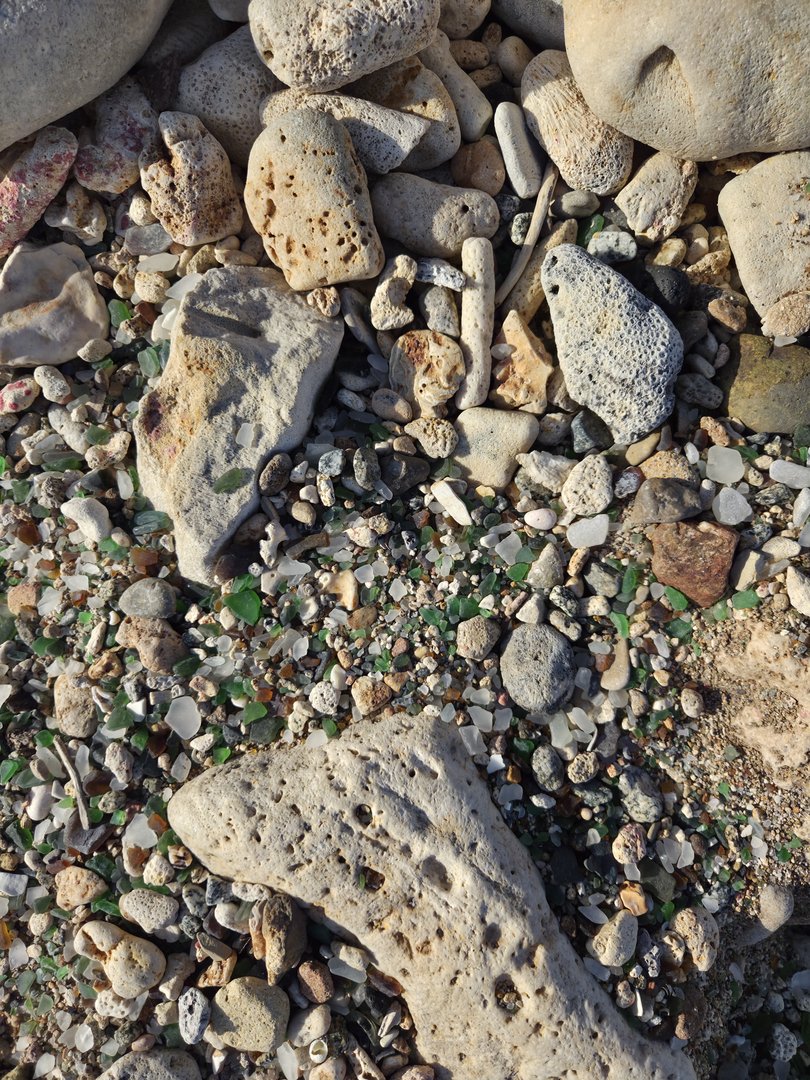
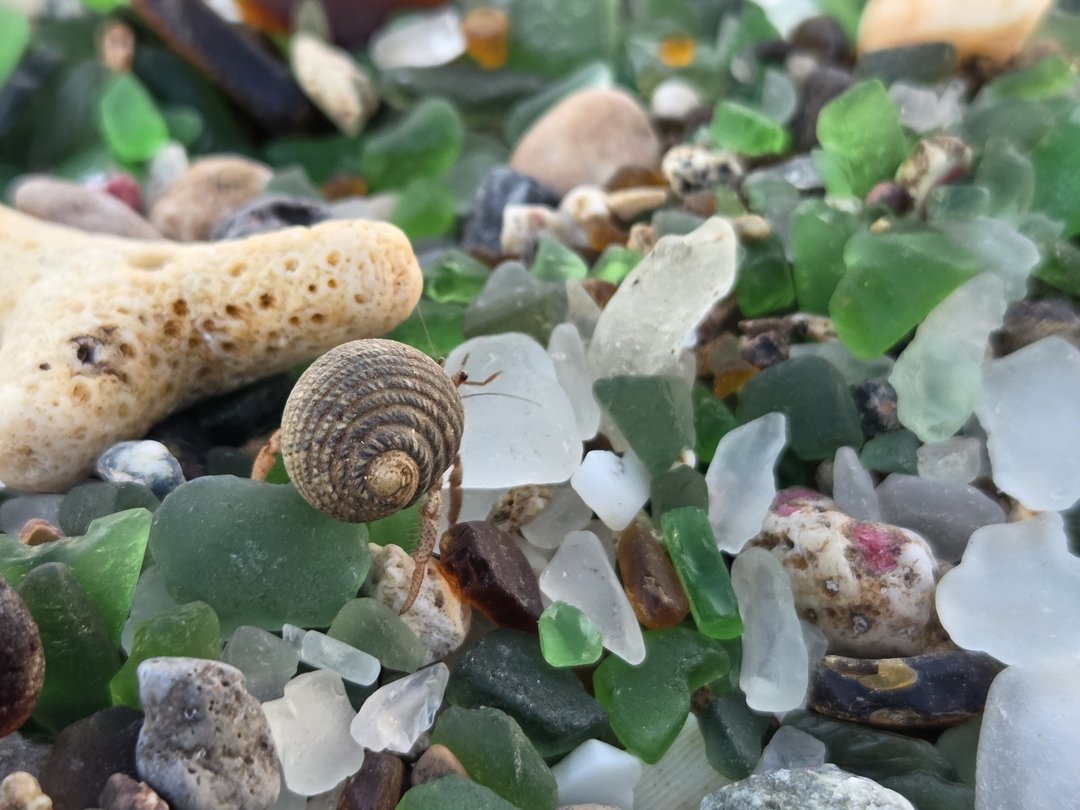
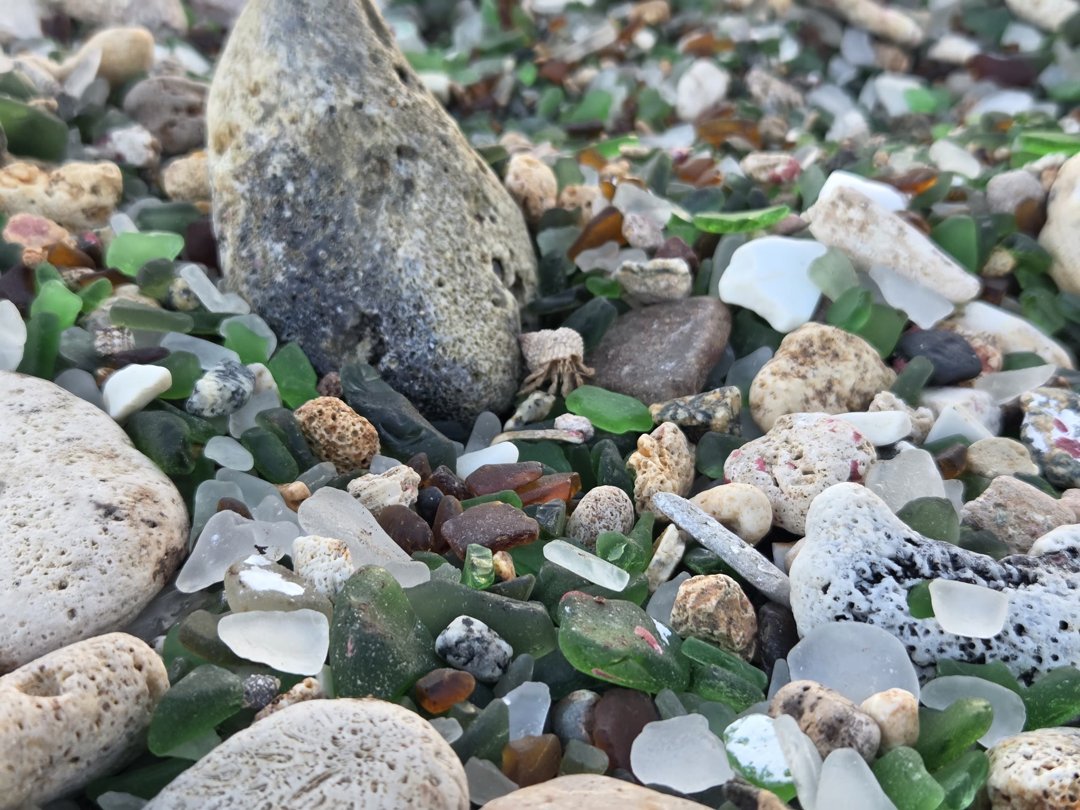
and its shoreline is made of glass. Not sand with glass in it. Glass. Green, white, aqua,
amber, and if the tide has been kind, cobalt blue, packed into the gaps between coral stones
and running along the waterline in drifts you can hear underfoot.
None of it was planted there. Every piece began as something ordinary and unwanted, a bottle
or a jar or a broken pane, and the Caribbean spent decades rolling it against coral and sand
until the edges went and the shine turned to frost. What was litter came back as something
people fly across an ocean to look for. We like that better than a legend.
How you get there
You paddle. There is no road, no bridge, no ferry and no boat service. The island sits a
short way off the coast and a kayak is the sensible way across, which is why the tours exist
at all.
We start at the boat ramp next to Flying Fishbone in Savaneta. You park, you meet your guide,
you get a kayak, a paddle, a life jacket, a trowel and a collection bag. The crossing takes
five to ten minutes on the water we usually get, because Savaneta sits behind a reef on the
sheltered side of the island. Then you are ashore, and the rest of the time is yours.
Can you swim it on your own? People ask, and the honest answer is do not. It looks close from
the shore. Between you and it there is open water with boat traffic, current that moves with
the tide, and nowhere to stand or rest halfway. There is no shade on the island, nothing to
buy, and nobody there if it goes wrong. A kayak carries your water, your bag and your way
home. Swimming out carries none of that.
Is it safe?
For an ordinary person on a guided crossing, yes. The water on this coast is flat compared
with the north side, the paddle is short, a guide stays with the group the whole way, and you
do not need kayak experience to do it.
What you do need is shoes. The shore is coral and glass, not beach sand, and
reef shoes or old trainers are the difference between a good hour and a careful one. Bare feet
are a bad idea on a beach made of bottles, even frosted ones.
Children come from six. Younger than that and the seat, the sun and the walking surface stop
being fun, so ask us before you book.
What you find, and what you take
Every piece is frosted opaque and worn round, and the colour by colour odds are in the
table below. We never promise anyone will find sea glass, in any colour or any quantity: the
shore is not curated and nobody restocks it, so what is on the waterline this morning is
whatever the last tide put there.
You can take sea glass home, and this is the question almost everyone arrives with. The
answer turns on one thing: sea glass is manmade. Every piece was a bottle. That makes it a
different question from sand, shells and coral, which Aruba asks you to leave exactly where
they are. A handful of frosted glass in your pocket is not a piece of the reef.
The rule on top of that is ours rather than anybody's law, and we ask it of every group. A
handful, not a bucket. And put back anything that still has a sharp edge, because the sea has
not finished with it. The shore stays worth crossing for only if people take a pocketful and
leave the rest.
The best light
Three departures a day, the same route, a different day out. The 8:30 AM run gives you the
flattest water and the coolest air, and it is the one to take if anyone in your group is
unsure about kayaking. The 1:00 PM run gives you the strongest colour in the water and the
easiest photographs of the glass, because midday light goes straight through it.
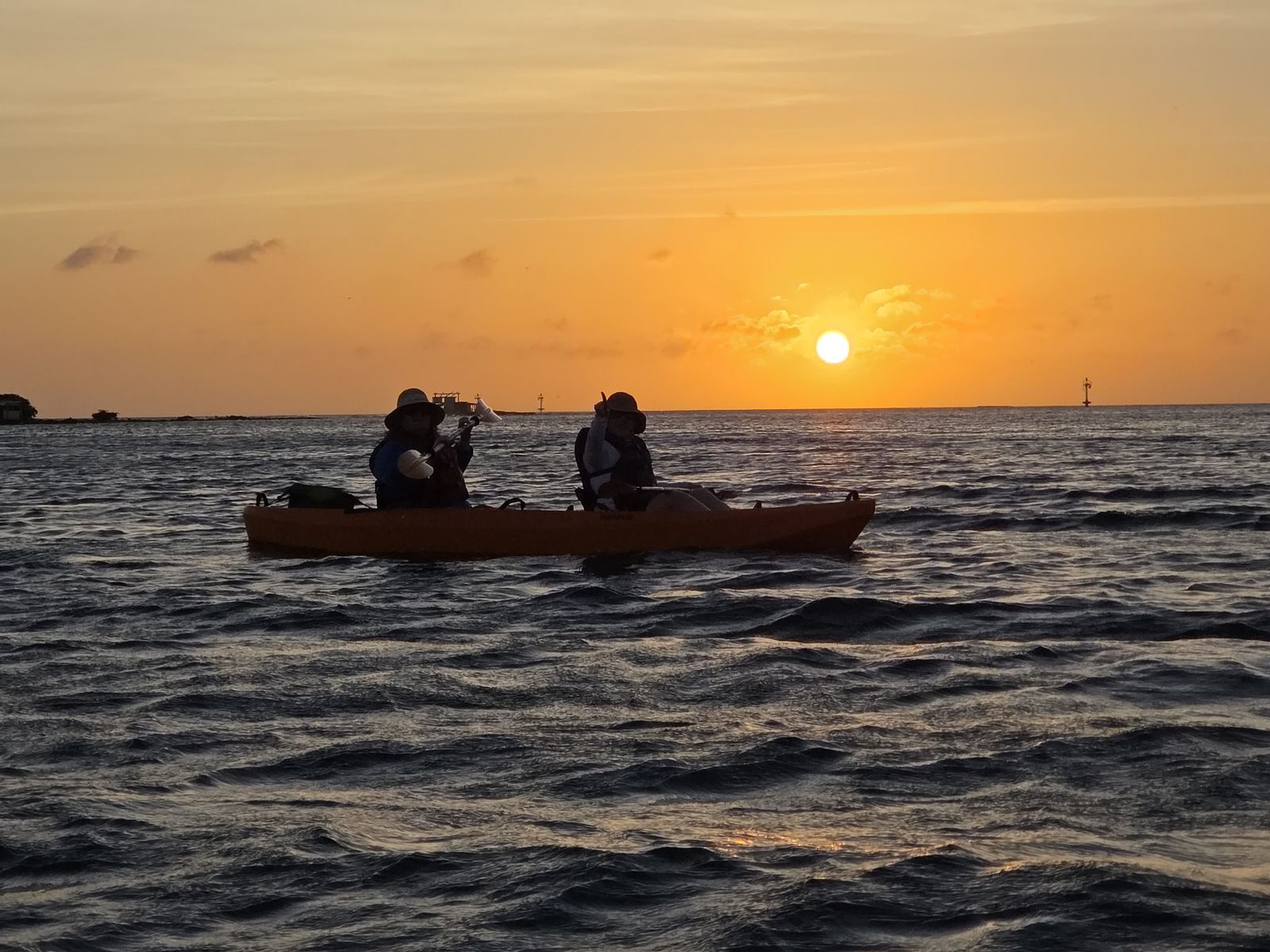
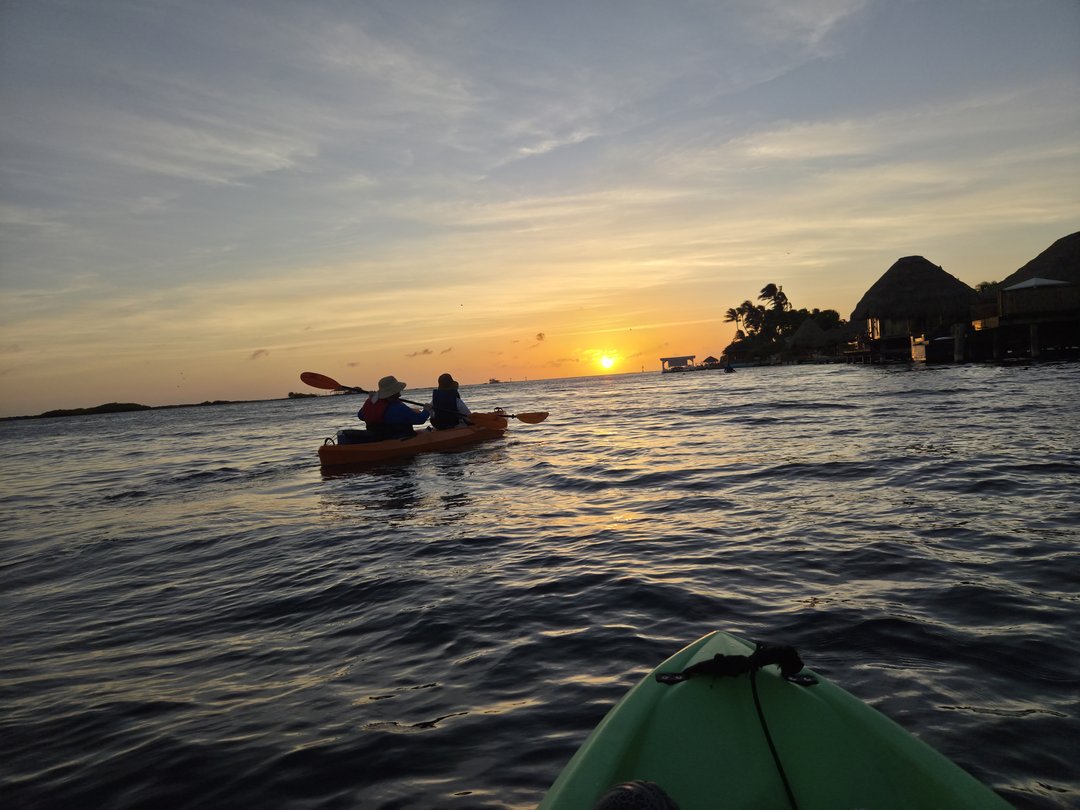
The 5:00 PM run is the sunset paddle, and it is the one
people talk about afterwards. You hunt the shoreline while the light drops, then paddle home
with the sun going down behind Savaneta. Low sun across a shore made of glass does exactly
what you would hope.
If you only have one morning on this coast, take the 8:30 AM. If nobody in your party is
going to be up for 8:30 AM on holiday, take the 1:00 PM, and we respect that.
What it costs
US$89.99 per adult and US$69.99 per child aged 6 to 12, on every departure, morning,
afternoon and sunset. About two and a half hours from the ramp and back.
What Sea Glass Island actually is
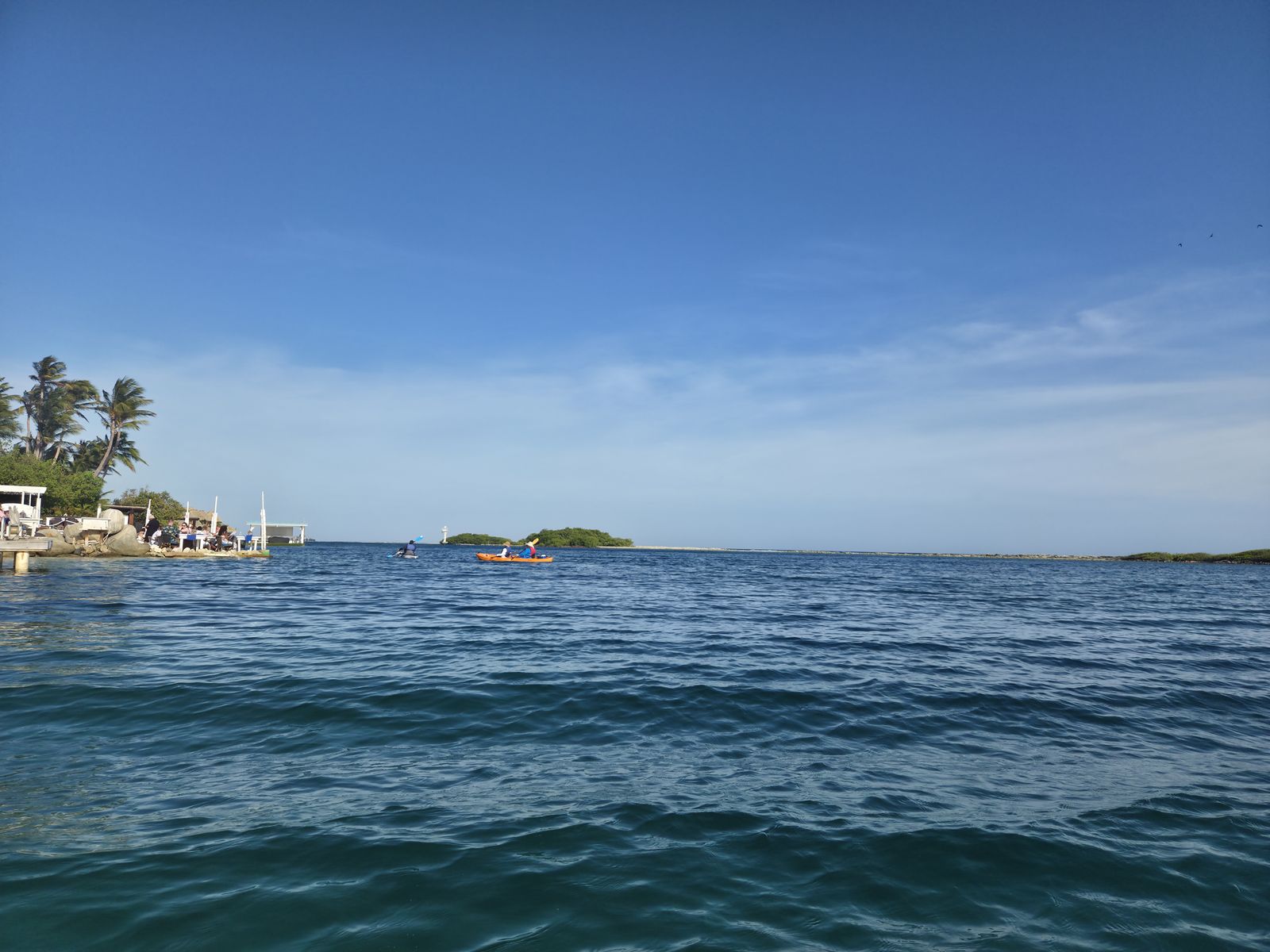
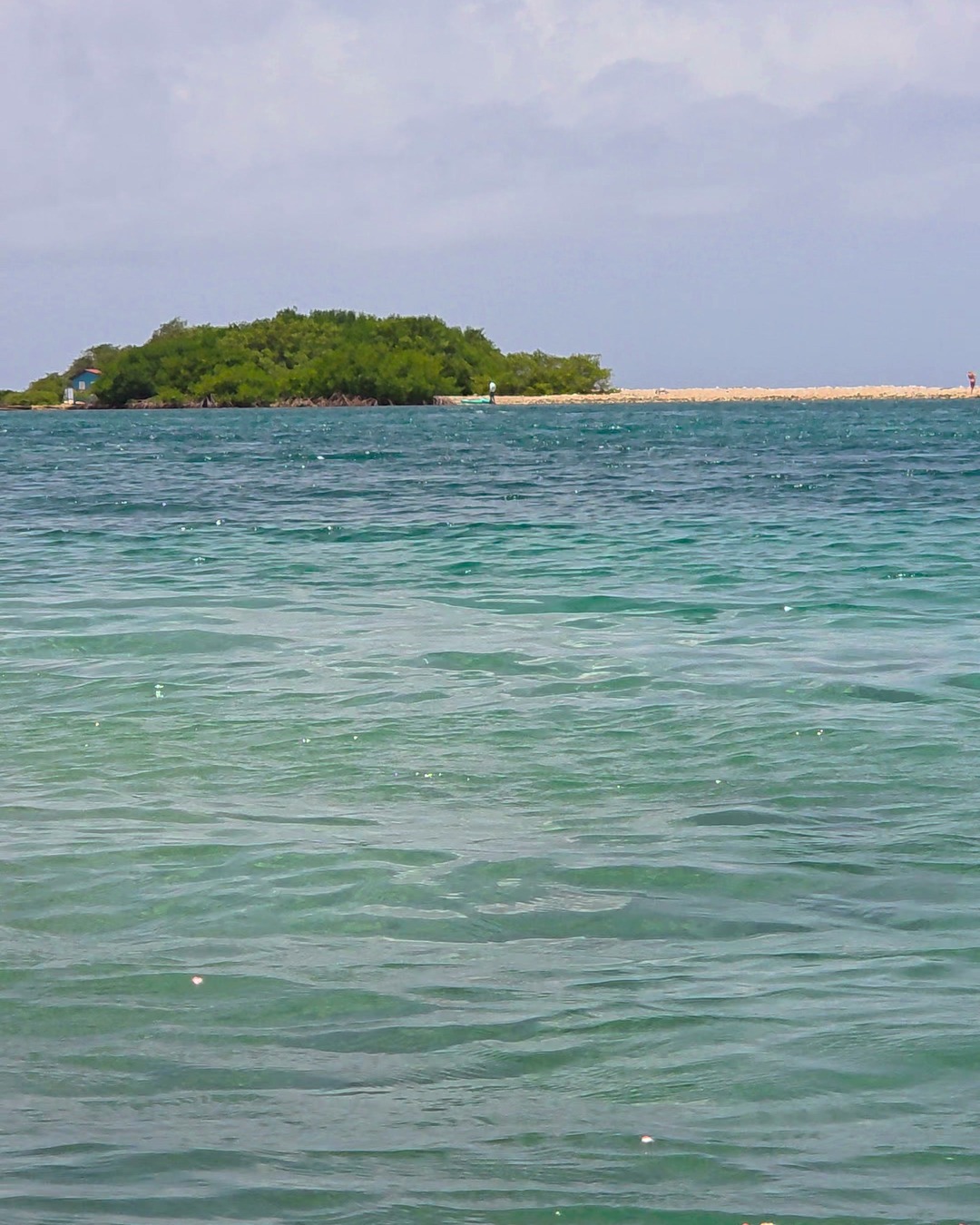
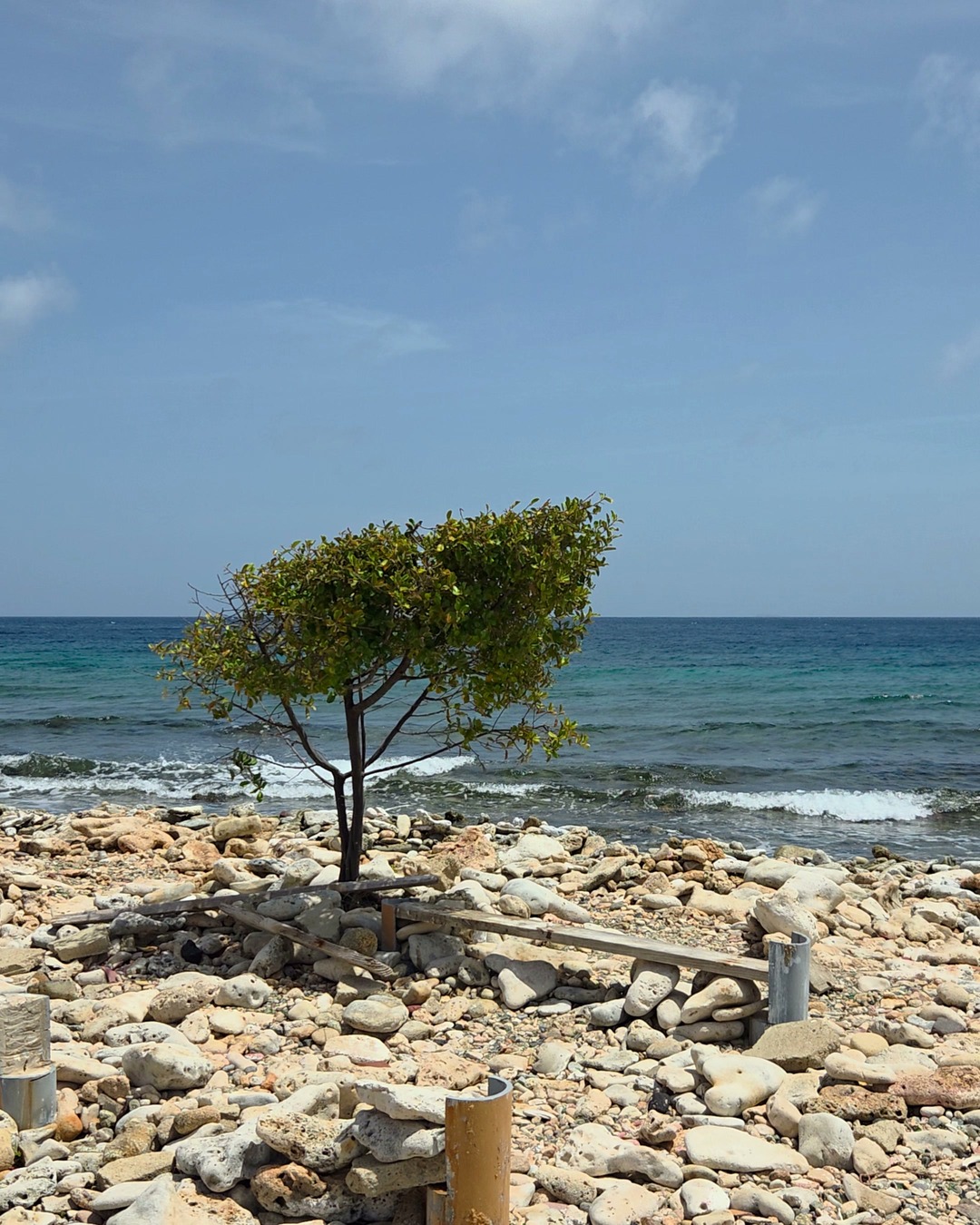
It is small, and you can see it from the launch ramp at Savaneta,
the old fishing village on Aruba's south coast. From a kayak it takes shape as a strip of pale
shore, a scatter of coral rubble and one wind shaped tree growing where nothing sensible would
grow. Ashore, the drifts are deep enough in places to run a hand through. Kneel down on a
good stretch and the ground you are kneeling on glitters.
There is nothing else on it. No kiosk, no bathroom, no shop, no shade to speak of, no
lifeguard and nobody selling anything. That absence is the appeal, and it is also the reason
to read the practical sections below before you go.
The honest story of the glass
We are not going to invent a shipwreck for you. The same stretch of waterline can be
generous one week and stubborn the next, which is why the hunt is the thing you are
booking. The handful in your pocket at the end is a bonus you earned.
What you will find, and how often
| Colour | How often | Where it came from |
|---|
| Bottle green | Common find | Old soda and beer bottles, frosted into soft emerald shards |
| Frosted white | Common find | Once clear glass, now moon white and smooth as a beach pebble |
| Ocean aqua | Good find | Mid century glassware, frosted to the exact colour of the water you paddled through |
| Cobalt blue | Lucky find | Old medicine and apothecary bottles: deep blue, and worth the hunt |
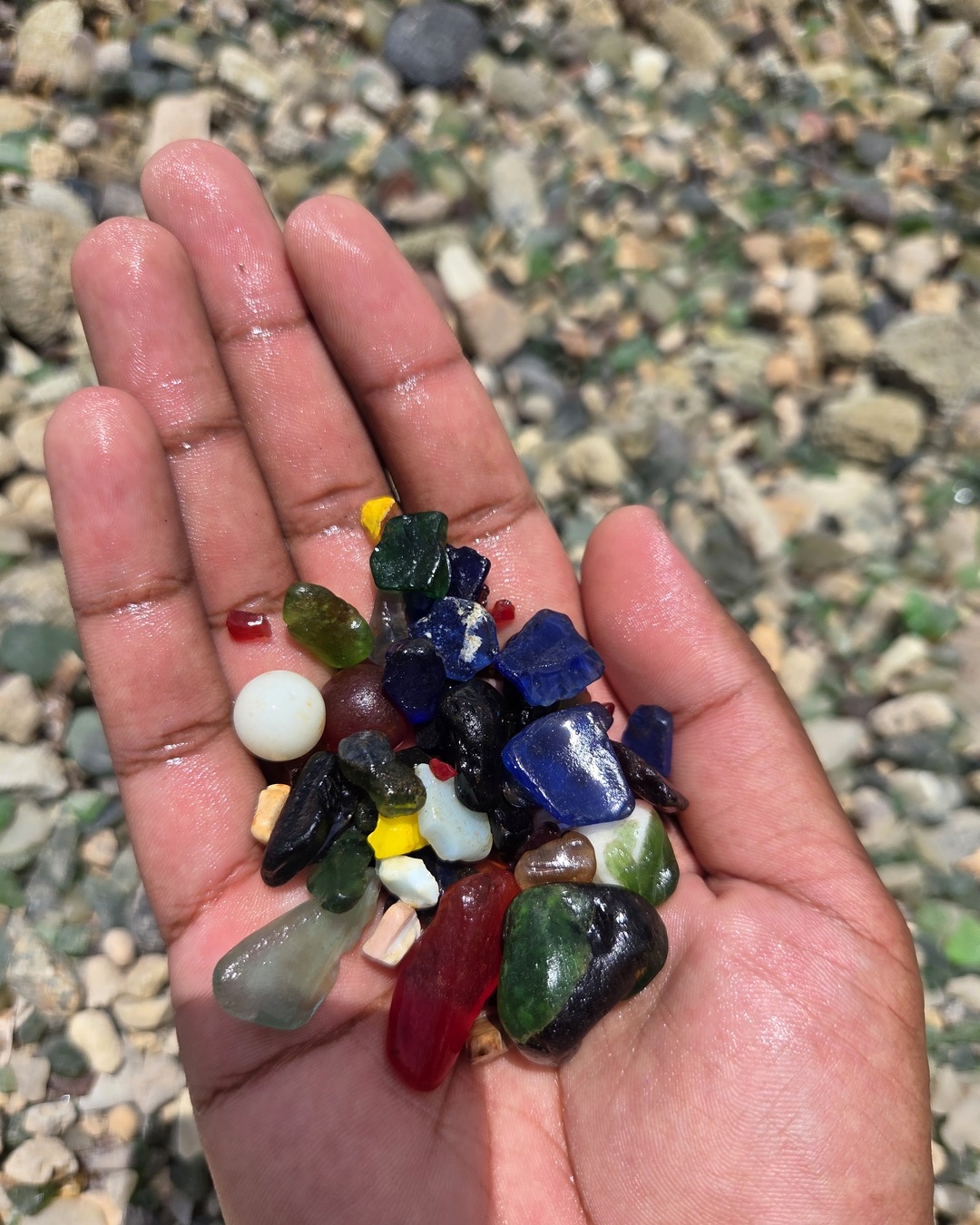
The palm sized haul photographed in our gallery came out of one
afternoon, red included. That was a good afternoon, not a typical one.
How to actually find it
- Hunt low and slow. The drifts hide in the gaps between the coral rubble rather than lying
out in the open, so the person crouching finds more than the person walking.
- Work the waterline and the line above it. The sea sorts by weight, and the two lines hold
different sizes.
- Wet stones lie. A dull chip looks like nothing dry and lights up wet, so rinse before you
reject it.
- Look for edges that have gone soft. A piece that still cuts is not finished, and it goes
back.
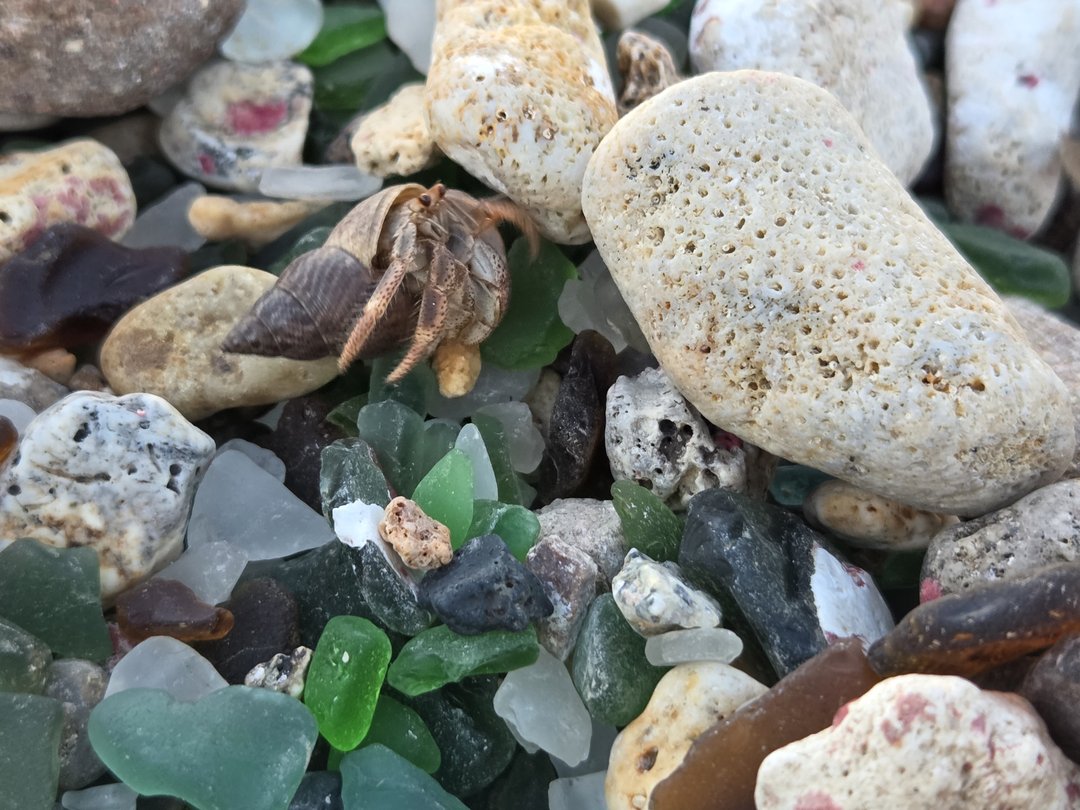
- Check who lives there first. The hermit crabs on this shore use the glass, and we film
them and leave them exactly where they are.
Can you bring sea glass home from Aruba?
The short answer
Yes, within reason. Sand, shell and coral are pieces of the beach and the reef themselves,
and Aruba asks visitors to leave those alone. Glass is the one thing on that shoreline that
people put there in the first place.
That distinction is worth carrying with you around the whole island, not just here. And take
the photograph before you pick a piece up, because sea glass never looks as good in a jar at
home as it does sitting wet on the shore it came from.
How to get there
Here is the thing people most often get wrong when they plan a visit: you do not drive to
the island. You drive to the ramp opposite it and cross from there.
The meeting point
Our departures meet at the boat ramp next to the Flying Fishbone restaurant in
Savaneta. In Google Maps it is the pin at
maps.app.goo.gl/t2V2TGhrHTExQdsA8,
and the plus code is C3V4+V3F Savaneta. Put one of those in your phone
before you leave the hotel, because the ramp is a gap in the waterfront rather than a
signposted attraction.
- Driving. Savaneta sits on the coast road between Oranjestad and San
Nicolas, roughly twenty minutes from the capital and a little over ten minutes from the
airport. Parking is roadside and informal, the way it is everywhere in the village.
- Door to door pickup. We collect you where you are staying and bring you
back afterwards for US$110 per vehicle round trip. That is per booking and
not per person, and a larger party takes a second vehicle at the same rate. You add it
yourself at checkout: it is the Hotel or Port Pickup extra, and it appears on the step
after your contact details rather than the first screen.
- Arriving by ship. The port is at Oranjestad and the drive down is
straightforward, but a cruise day runs on somebody else's clock. We wrote a whole page on
the timing of it for kayak tours for cruise
passengers.
What the ramp is like
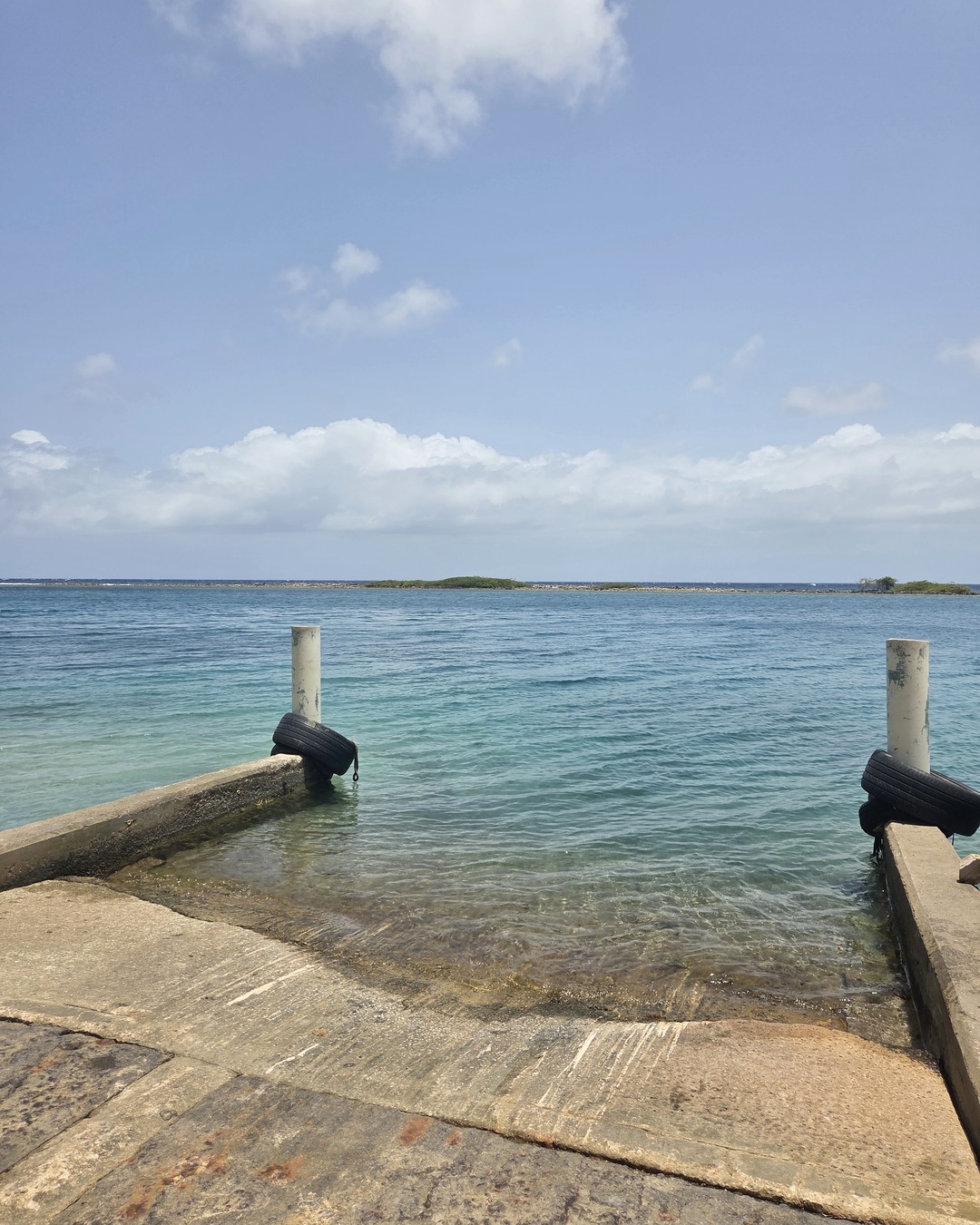
It is a working boat ramp on a working waterfront, not a resort dock: concrete running down
into shallow turquoise water between two tire capped mooring posts, with the islet on the
horizon behind it. There is no changing room, so come dressed to get wet. Arrive
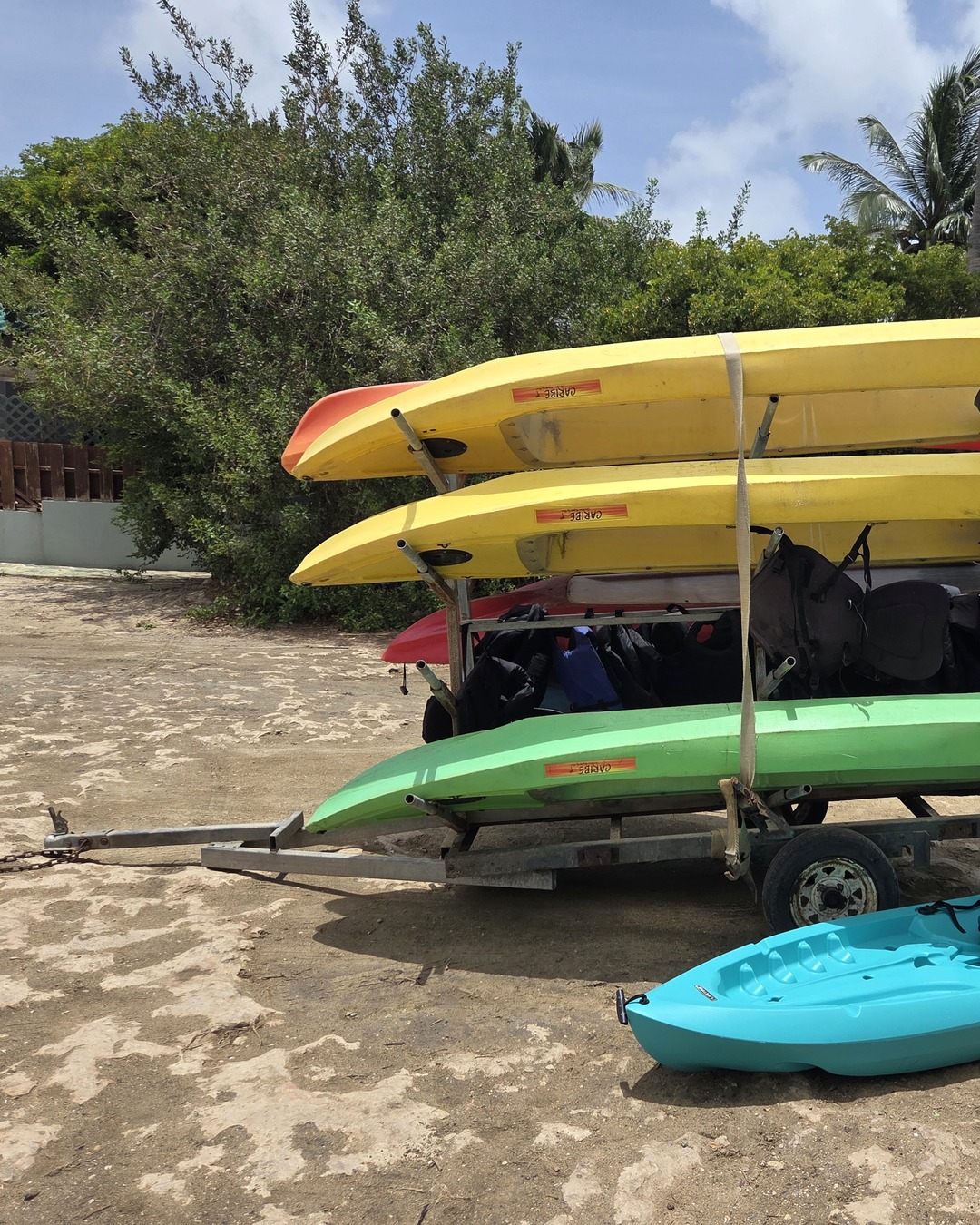
15 minutes early, message us when you get there, and look for the guide with
the colourful ocean kayaks. They are hard to miss.
While you are in the village: the Flying Fishbone is
the restaurant with its tables standing in the shallow sea right next to the ramp, and
Zeerovers is the fish pier a few minutes along, where the
catch is priced by weight and eaten with your hands. Both are worth building a day around.
The crossing, described honestly
It is open water, and that matters more than the distance does. This is not a sheltered
lagoon: it is a stretch of exposed water between the shore and the island, and the wind has
an opinion about it. On an ordinary day that means a pleasant amount of work and the small,
specific satisfaction of having got somewhere under your own power. The guide picks the line
across, decides when to go and when to let a gust pass, and sets a pace the whole group can
hold. That judgment is most of what a guide is for on this route.
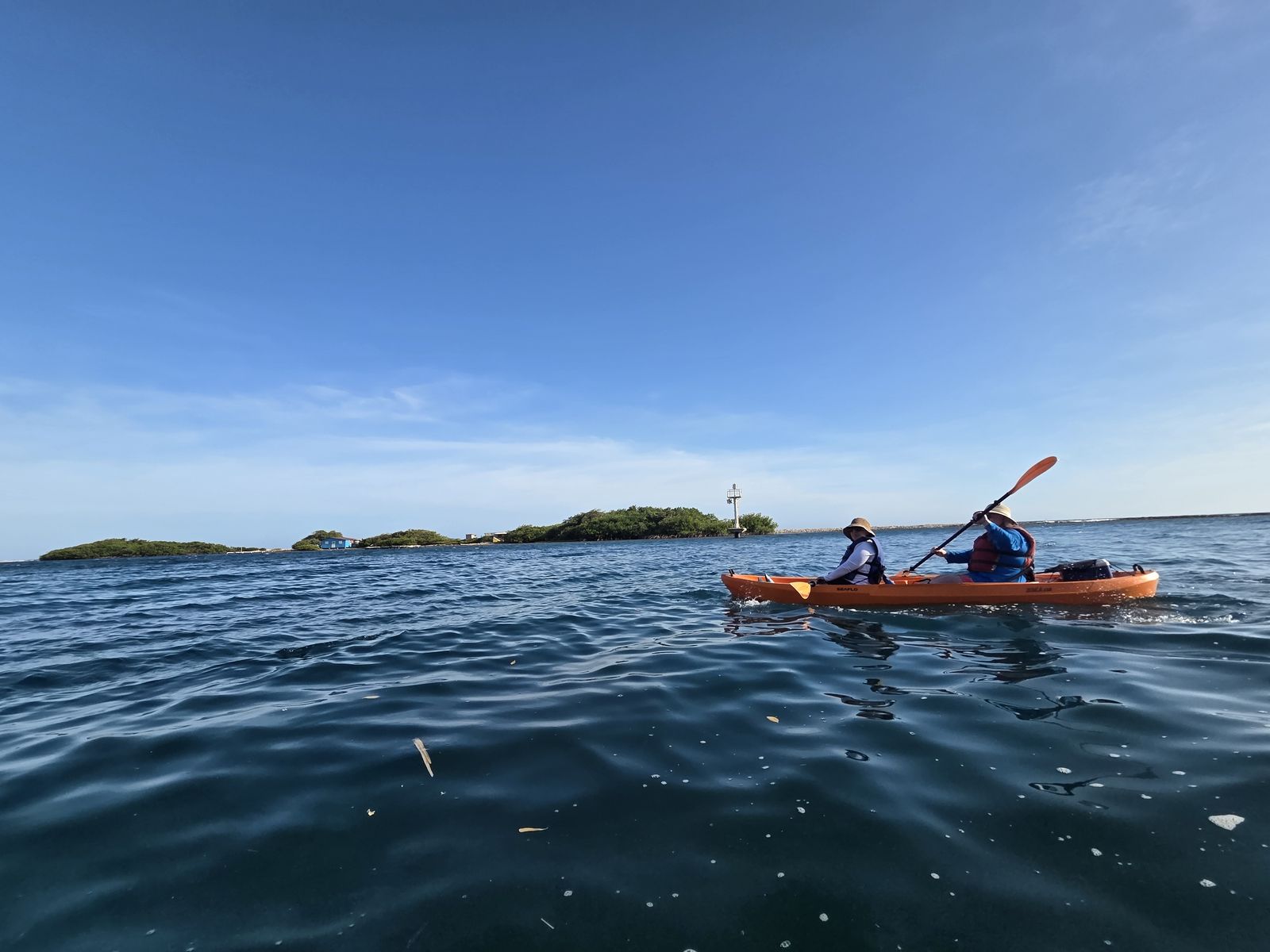
The boats are open sit on top kayaks, broad and stable, with no cockpit to climb into. The
fleet is tandems plus one single, and the roomiest tandem is kept for taller or larger
paddlers. Life jackets are provided and worn on the water. There is a shared dry bag on
board.
What a departure looks like, start to finish
- 15 minutes before. You arrive at the ramp, message us, and find the
guide with the kayaks. Swimsuit already on, hat and sunglasses on a strap.
- The crossing. Open water at the group's pace, with the island getting
steadily less abstract.
- Ashore. The longest part of the tour. You land, and then you hunt: along
the waterline and in the gaps between the coral. Swim if you want to. Sit down if you want
to.
- The paddle home. Back across, usually with the wind arranged differently
than it was on the way out. On the 5:00 PM departure this is the part people photograph.
- About 2.5 hours later you are back at the ramp, salty, with a pocket that
rattles.
Included: your guide, the kit you are handed at the ramp, bottled water
and fresh local fruit.
When to go
The shore is there all year, and what changes it is the tide rather than the calendar. Aruba
sits outside the wettest part of the Caribbean, and the rain that does arrive tends to be a
short warm shower that has moved on before anybody finishes discussing it. We do not cancel
for rain by itself, and you are about to get wet on purpose.
The variable that actually matters is wind. Aruba's trade wind blows steadily out of the
east, strengthens through the afternoon, and is at its most assertive in the spring months.
The whole reason our tours run on the south coast is that the trade wind crosses the island
before it reaches this water. On a breezier day the answer is usually an adjustment rather
than a cancellation: a different line across, a shorter open stretch, a change of stop. The full policy, including
what happens to your money, is on the weather and
cancellation page.
One piece of advice worth more than the rest
Book this early in your trip, not on your last morning. If a departure gets moved on day
two of a week, you have six other mornings. If it gets moved on the morning of your flight,
you have a refund and a story about the tour you did not do.
What to bring
- Your swimsuit, already on.
- Reef safe mineral sunscreen, zinc oxide or titanium dioxide, on at least fifteen minutes
before you launch so it has bonded rather than washing straight off.
- A hat and sunglasses, both on a strap. This is the item people forget every week.
Sunglasses do not float.
- Footwear that stays on your feet. Water shoes or sandals with a heel strap. Flip flops
come off in the water, and then you are the person chasing a shoe.
- A refillable water bottle. We carry drinking water for the group, but having your own
within reach is how you actually drink it.
- A towel, left in the car for afterwards.
Leave behind anything you would be sad to watch sink: rings, watches, hotel key cards, loose
cash. There is no locker at the ramp. If you bring a phone, bring it in a proper waterproof
pouch on a lanyard, and test the pouch in a hotel sink with a tissue inside before you trust
it. The full list, including the sunburn advice people ignore until it is too late, is on
what to bring on an Aruba kayak tour.
Swimming, children and accessibility
Swimming. Basic swimming ability is a participation requirement, it is
written into our terms, and we do not quietly waive it. Basic does not mean fast or trained.
It means that if you found yourself in the sea beside the kayak wearing a life jacket, you
could stay calm, keep your face clear and move yourself the few metres back to the boat. Most
adults who describe themselves as weak swimmers clear that comfortably. Somebody who cannot
swim at all does not. The long version is on
do you need to know how to swim.
Children. The minimum age is 6, and children from 6 to 12 pay US$69.99
instead of the adult price. They ride a tandem with an adult from their own party and wear a
life jacket throughout. Under 6 is handled case by case by a person, so ask before you book.
More on families, attention spans and what actually works is on
kayaking with kids in Aruba.
Accessibility, stated plainly. This tour is not wheelchair accessible.
There is no dock, no transfer hoist, no adaptive seating and no accessible bathroom at the
meeting point, and the launch is natural ground. We cannot remove the transfer onto and off
the kayak, the sun, or the duration, and we cannot waive the swimming requirement or the life
jacket for anyone. What we can adapt is real though: a tandem with a stronger paddler, a
slower pace, the 8:30 AM departure for cooler air and calmer water, extra hands at the launch
if we know in advance. The honest, unflattering, full version is on
pregnancy, mobility and accessibility,
and if you are prone to motion sickness, the timing of tablets is on
seasickness and motion comfort.
What this tour is not
Two things, because guessing wrong about either one ruins a morning.
There is no snorkeling on the Sea Glass Island route, no snorkel stop and no
snorkel gear on board. It is a paddle and a landing. If fish are the reason you are booking,
book the other route.
There are no mangrove channels on this route either. The crossing is open
water. Anyone describing a mangrove paddle to Sea Glass Island is describing a different
tour.
The route with both is Spanish Lagoon and Mangel Halto:
sheltered mangrove channels and two snorkel
stops on the reef, gear included, same 2.5 hours, same price, meeting instead at
the Mangel Halto beach sign in
Pos Chiquito. If you cannot choose, we wrote the comparison
out honestly: Sea Glass Island or Mangel Halto.
Doing both, in that order, on consecutive mornings, is what guests who have two mornings tell
us worked.
Who takes you across
Vale's Rambo Adventures is a Savaneta operation. It was founded by Rambo,
a veteran Aruban ranger with decades on this coast, who leads the weekend departures himself
and taught every guide on the crew the way this water behaves. Rambo, Joshua, Darwyn, Morela
and Luis run the departures, and one of the crew meets you at the ramp. They work in English,
Spanish and Papiamento, which is covered on
what languages our guides speak.
Groups are small on every departure and at every time slot. That is how we run rather than a
quiet season promise, and it is the reason your guide knows everyone's name by the time you
land.